DEVELOPMENT OF LEGAL REGULATION OF ARTIFICIAL INTELLIGENCE
DOI:
https://doi.org/10.5281/zenodo.20056630Abstract
Legal frameworks have recently been proposed as a means of regulating Artificial Intelligence through risk-based
classification. In this paper, we show how AI governance models can be synthesized from environmental abstractions
and high-level ethical specifications across the EU, USA, and China. We present a comparative analysis which suggests
that the shift toward centralized federal oversight performs as well or better than previous ethical-based models. Our
results indicate that this automated legislative synthesis is crucial for balancing global innovation with human rights in an
increasingly automated economy.
Keywords
Artificial Intelligence (AI), Legal Regulation, EU AI Act, National Policy Framework, Risk-based Classification, Executive Order 14179, Algorithmic Accountability, Human Rights, Digital Sovereignty, Innovation Policy, technological sovereignty.References
1. Regulation (EU) 2024/1689 of the European Parliament and of the Council of 13 June 2024 laying down harmonised
rules on artificial intelligence and amending Regulations (EC) No 300/2008, (EU) No 167/2013, (EU) No 168/2013,
(EU) 2018/858, (EU) 2018/1139 and (EU) 2019/2144 and Directives 2014/90/EU, (EU) 2016/797 and (EU) 2020/1828
(Artificial Intelligence Act) (Text with EEA relevance)
2. European Union Artificial Intelligence Act: a guide 26 February 2026; Bird&Bird
3. A turning point in AI: Europe’s human-centric approach to technology regulation; Yavuz Selim Balcioğlu, Ahmet
Alkan Çelik, Erkut Altindağ;
4. Impact of EU Regulations on AI Adoption in Smart City Solutions: A Review of Regulatory Barriers, Technological
Challenges, and Societal Benefits; by Bo Nørregaard Jørgensen * and Zheng Grace Ma;
5. Kovachich, L. (2020, July 7). Chinese experience of developing the artificial intelligence industry: strategic approach.
6. https://www.emergobyul.com/news/european-artificial-intelligence-act-impact-medical-devices
7. https://www.informatica.com/resources/articles/eu-ai-act-global-impact.html
html?utm_medium=Direct
AI%20Act%20that%20will:
10. https://www.mdpi.com/2078-2489/16/7/568
11. https://www.sciencedirect.com/science/article/pii/S2666659625000241
intelligence-act-guide.pdf
13. https://eur-lex.europa.eu/legal-content/EN/ALL/?uri=CELEX:32024R1689
14. https://www.federalregister.gov/d/2023-24283/p-2
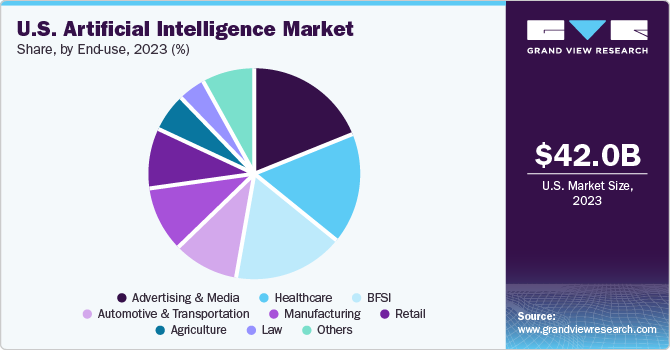
17. https://www.grandviewresearch.com/static/img/research/us-artificial-intelligence-market-share.png
18. Provisions on the Administration of Algorithm Recommendation of Internet Information Services (2022)

Downloads
Published
How to Cite
Issue
Section
License
Copyright (c) 2026 GREEN ECONOMY AND DEVELOPMENT

This work is licensed under a Creative Commons Attribution 4.0 International License.